
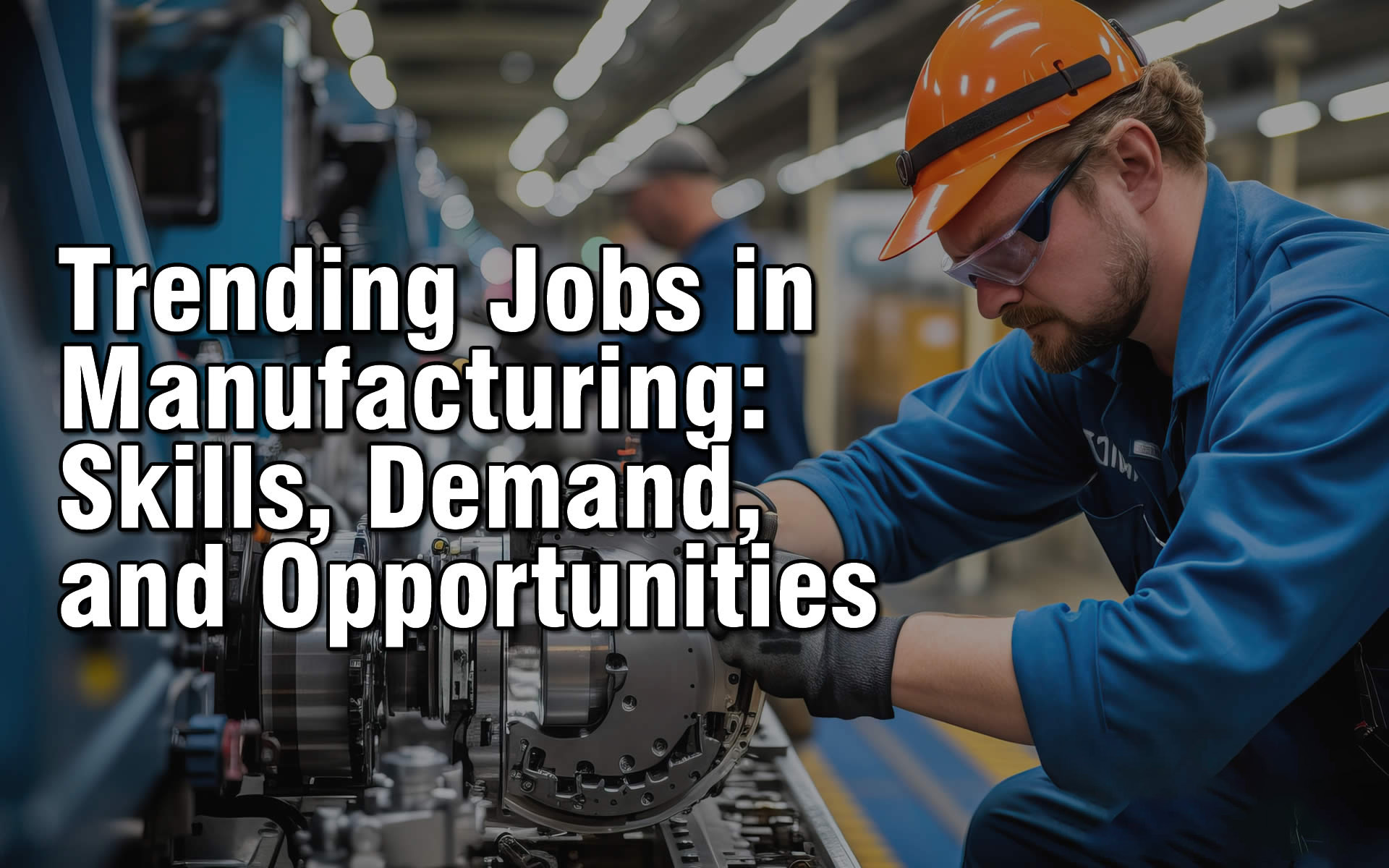
Wondering what the best manufacturing jobs are in 2024?
Discover the most in-demand manufacturing jobs in 2024, explore essential skills, and learn about the impact of technology and sustainability on the sector. Find out how you can prepare for a future in manufacturing today.
Introduction
In 2024, the manufacturing sector continues to evolve rapidly, driven by technological advancements and a global shift towards sustainability. Despite concerns about automation, there is a robust demand for skilled and semi-skilled workers. This article explores the trending jobs within the industry, highlighting the skills and certifications needed to thrive, the educational paths available, and the impact of new technologies on these roles.
Impact of Automation and Digital Skills
The Reality of Robots and Automation
While automation has replaced some tasks, it has also created new roles and opportunities for skilled workers who can manage and maintain these technologies.
Essential Digital Skills for Modern Manufacturing
Digital literacy is no longer optional. Today’s manufacturing workers need to be adept at using digital tools that enhance productivity and decision-making.
Australia’s Manufacturing Landscape
Dependency on Global Supply Chains
Recent global events have underscored the vulnerability of long supply chains, prompting a push towards more resilient local manufacturing ecosystems in Australia.
Opportunities in Local Manufacturing
This shift is expected to boost job creation significantly, offering numerous opportunities for skilled workers within the country.
Educational Pathways
Vocational and On-the-Job Training
Formal degrees are less common in manufacturing, with emphasis placed on practical, vocational training and certifications that provide direct skills applicable in the workplace.
Key Jobs and Roles in Manufacturing
Pick Packers
Role and Responsibilities
Pick packers are crucial in the logistics chain, handling the accurate picking and packing of goods for shipment. The rise of online shopping has spiked demand for these positions.
Path to Advancement
Starting typically on a part-time or casual basis, diligent workers often quickly ascend to supervisory or managerial roles due to the fast-paced nature of the work.
In demand skills and qualifications for pick packers.
- task and duties
- Receiving stock, selecting and preparing goods for dispatch, loading and unloading trucks.
- General warehousing duties, machine operation, cleaning, administration.
- Complying with occupational health and safety guidelines.
- skills
- Reliability and time-keeping
- Teamwork
- Ability to think on your feet
- Problem-solving
- training and qualifications
- No formal qualifications are required as training will be provided.
- But experience in similar roles can be helpful.
Production Workers
Specialisation and Skills
Gone are the days of monotonous assembly lines; modern production workers are highly specialised, operating complex machinery and ensuring quality control.
Automation and Training
As automation becomes commonplace, workers are required to upskill, making versatility a highly prized attribute.
In-demand skills and qualifications for production workers.
- tasks and duties
- Preparing and operating machines and power tools.
- Recording production data and checking output for quality.
- Quality assessment and control.
- training and qualifications
- No formal qualifications are required as training will be provided. But experience in similar roles can be helpful.
- You may be required to hold specific licences or accreditation.
Process Workers
Keeping Machines Running
Process workers maintain the smooth operation of manufacturing machinery, ensuring production deadlines are met and quality standards are maintained.
Opportunities for Growth
With no previous experience required, these roles offer significant on-the-job training, allowing workers to gain valuable skills while earning.
In-demand skills and qualifications for process workers.
- tasks and duties
- Preparing and maintaining production reports and records.
- Maintaining equipment and coordinating services when required.
- Maintaining a high standard of safety in the workplace.
- Following set production schedules.
- Reporting faults or production issues to the manager.
- training and qualifications
- Most manufacturing companies hire process workers at an entry-level with no previous work experience.
- Therefore, you have a chance to develop your technical abilities, time management, and problem-solving skills. This will help you improve your work experience.
Impact of New Technologies
Sustainable Production Techniques
The manufacturing sector is increasingly adopting sustainable and eco-friendly production methods, which not only reduce environmental impact but also open up new job roles focused on green technologies.
Impact of Net Zero Goals
Decarbonisation and Manufacturing
The drive towards net zero emissions is reshaping manufacturing, with a focus on reducing the carbon footprint of production processes and end products.
Local Production Benefits
Shorter, more sustainable supply chains are not just environmentally beneficial but also economically advantageous, supporting local economies and job markets.
Final Thoughts
The manufacturing sector in 2024 offers a vibrant array of career opportunities that are both economically vital and personally rewarding. With the right training and a willingness to adapt to new technologies, individuals can find stable and fulfilling careers in this ever-evolving industry.